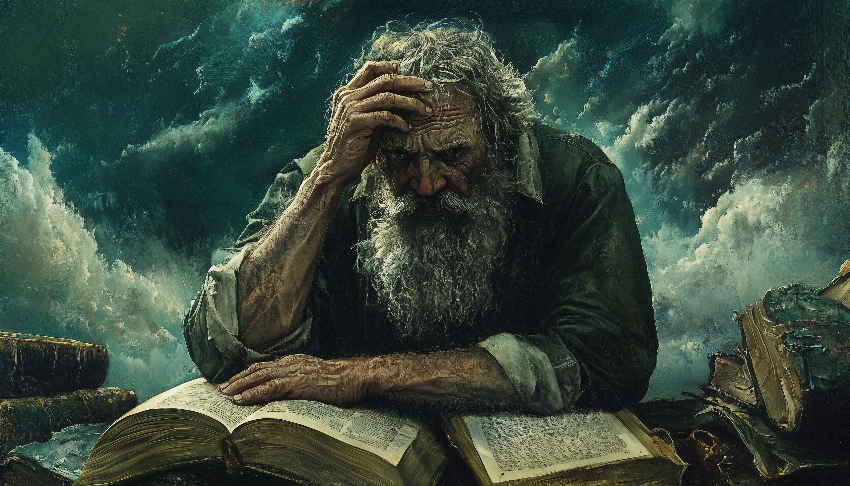
There’s a strange, steady joy in sitting down with a notebook and realising that the thoughts you’ve carried for years, the ones that have sat at the back of your mind for so long, might actually be worth putting into words. Not because they’re perfect or destined to reshape the world, but because they’re yours. They belong to the singular way you see reality, and that alone gives them a kind of quiet authority.
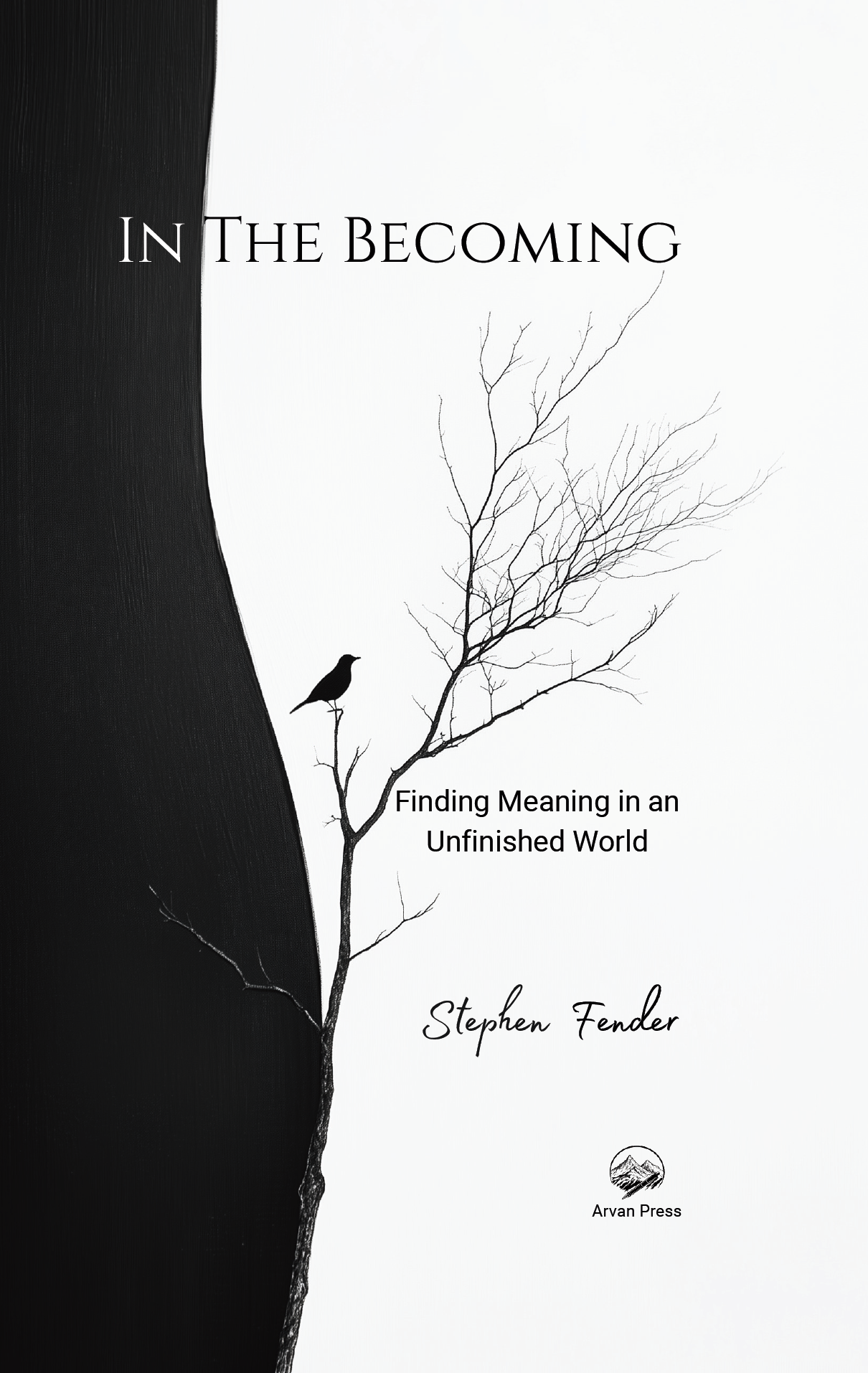
When I wrote In The Becoming, it wasn’t because I imagined myself joining the canon of philosophical heavyweights. Sartre, Simone Weil, Kierkegaard. These were names that once seemed to occupy a lofty realm. But we no longer live in a world where philosophy is a rarefied, cloistered thing. Ideas aren’t confined to the desks of the great anymore. The door is wide open. Anyone can step through.
And maybe we should.
We are living in a moment where the ground beneath our feet keeps shifting. Technology is reshaping our attention, culture is fracturing into countless little streams, and meaning is becoming something we have to chase rather than encounter naturally. In a time like this, the responsibility for thinking well can’t sit solely with the Sartres and the Heideggers of history. It shifts toward us. Ordinary people, quietly noticing the world and writing down the things we see and feel.
That’s what a personal philosophy is: not a grand system, not a manifesto, but an honest attempt to articulate the shape of inner experience. And there’s something liberating about realising you’re allowed to do that. You’re allowed to say, “This is how I understand life today. This is what I see when I look at the world.” Maybe you’ll refine it later. Maybe you’ll throw half of it away. But the act of writing gives your thinking a home.
What surprised me most when publishing In The Becoming was not the satisfaction of finishing a book. It was the sense of standing alongside a long, unbroken line of people throughout history who have done exactly the same thing: taken up a pen and tried to make sense of being alive. Not as experts. Not as authorities. But as humans who felt something stirring inside and wanted to follow it.
There’s a joy in that. A kind of grounding. Writing your own philosophy deepens your presence in the world. It forces you to slow down, to notice what your beliefs are, to trace the shapes of your intuitions. It’s like stepping more fully into yourself.
And I genuinely believe we need more of us to do that. We need more voices attempting to describe the inner dimension, more people paying attention to the way meaning emerges in their own lives. If philosophy is only left to the giants, it becomes distant, abstract, and slightly irrelevant. But when ordinary people begin to reflect on their own being and becoming, something shifts. Philosophy returns to what it originally was: the practice of living.
So if you’ve ever felt the urge to write your worldview down, follow it. If you’ve ever sensed that some part of your experience deserves a voice, give it one. You don’t need permission. You don’t need credentials. All you need is curiosity and the willingness to shape your thoughts into words.
There’s a certain beauty in discovering that you, too, are allowed to join the conversation of the centuries.
And who knows? Your thoughts might become a lantern for someone else out there, someone quietly wandering through their own unfinished world, looking for a way to understand what it means to be here at all.

Leave a Reply